Saturday, October 16, 2021
By Liban Ahmad
In 2019 Somalia became “the 30th African country to sign the Kampala Convention” (African Union Convention for the Protection and Assistance of Internally Displaced Persons in Africa.” The Kampala Accord commits Somalia to protect people against “displacement based on policies of racial discrimination or other similar practices aimed at/or resulting in altering the ethnic, religious or racial composition of the population” and “displacement used as a collective punishment.” In the National Policy on Refugee-Returnees and Internally Displaced Persons (IDPs), the Federal Government of Somalia fully commits itself to protect citizens against the use of forced displacement resulting from “policies relating to clan affiliation…, collective punishment and other human rights abuses…” [and] forced eviction of individuals, families or communities from the homes or land that they occupy, without the provision of and access to appropriate forms of legal or other protection.”
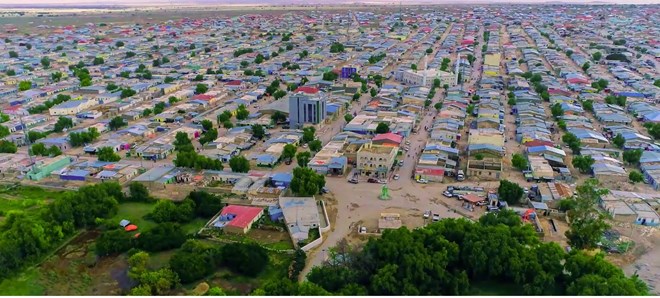
In light of the forced displacement of more than 1,500 persons in Las Anod by the Somaliland government, which views Somalis from the South as foreigners who have settled illegally in districts under its control, it is important to note that forced displacement is a serious crime under the international law. Somaliland government cited security reasons to displace Somali citizens (collective punishment). Somaliland is a part of the Federal Republic of Somalia. Its claim that territories under its control are no longer a part of Somalia predisposes itself to resort to forced displacement. Forced displacement is classified as a crime against humanity and falls within the scope of international law. “In the case of a crime against humanity, the forced displacement has to be committed as part of a widespread or systematic attack directed against a civilian population, regardless of the existence of or connection with an armed conflict,” wrote Federico Andreu-Guzmán.
The Somali victims of the forced displacement are internally displaced persons (IDPs) who fled the Southern regions of Somalia to live in the Northern Somalia regions. The decision to forcibly displace the Somali citizens was preceded by community discussions in Las Anod about an appropriate response to the planned assassinations in the disputed town. The Somaliland government Ministers visiting Las Anod unilaterally made the decision to displace Somalis from the South, many of whom were born in the Las Anod. The committee of elders appointed by Garaad Jaamac Garaad Ismaaciil denounced forced displacement of Somali citizens – business owners, labourers, builders, children, women and elderly -- whom Somaliland government wrongly views as foreigners, in total violation of their citizenship rights “to be protected against being forcibly displaced from his or her home, region or place of habitual residence.”
There is the risk of wider forced displacement in districts under the Somaliland administration. The Deputy Governor of Sanaag Mohamed Khalif Noor called on locals to end their business partnerships with “foreigners, who have two weeks to leave Sanaag.” Failure to address the forced displacement in Northern Somalia will promote impunity in Somalia. Forced displacement will become more widespread and a form of reprisal in Somalia if the Federal Government chooses not to invoke the National Policy on Refugee-Returnees and Internally Displaced Persons, which is binding on all Somalia’s political authorities. Urging Somaliland to stop forced displacement and allow Somali citizens to return to their place of habitual residence before could prevent civil action against politicians and traditional leaders involved in the forced displacement of Somali citizens in Las Anod. Possible targets for civil actions include Somaliland MPs from Sool, the Speaker of Somaliland Parliament, the Minister for Interior, the Minister for Information, the Minister for Transport and Roads Development, and traditional leaders from Sool. Forced displacement is an incipient national security threat that can tip Somalia into a new cycle of civil war. Some MPS and traditional leaders based in areas under the control of Somaliland were once refugees, who now hold citizenships of host countries. Somaliland leaders should rethink the decision that resulted in the forced displacement of Somalis in Las Anod and honour its obligation to protect internally displaced persons (IDPs) who live or work in districts under its control. Describing the Somali IDPs as foreigners amounts to denationalisation – the state's involuntary removal of citizenship or nationality [or an authority].
Liban Ahmad
[email protected]