By Min. Deqa Yasin Hagi Yusuf
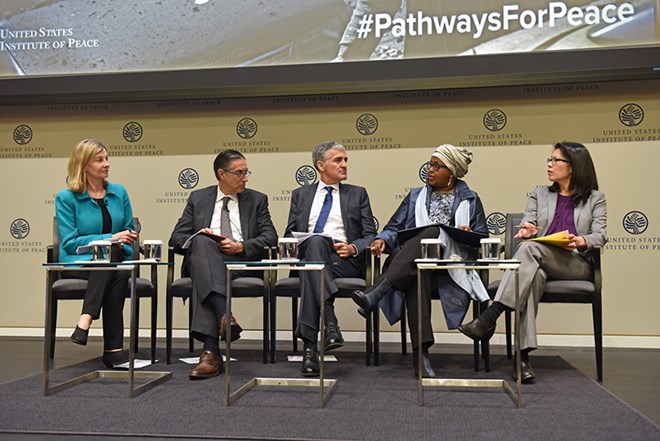
The study features many useful insights and points to valuable
initiatives for a wide range of contexts. From the perspective of
Somalia and my experience as Minister of Women and Human Rights
Development, three key messages and three next steps are particularly
important:
Three key messages from the perspective of Somalia
First, Pathways for Peace aims to shift our focus towards preventing conflict - rather than responding once lives have been destroyed. Representing a people who experience the enormous costs of conflict every day, my government knows that this is not only the smart thing but also the right thing to do. The increased momentum this report can generate for all actors to work together to prevent such suffering in the future gives me real hope for Somalia and for our globe.Finally, the report establishes that preventing conflict means investing in inclusion and participation of women and youth. This link is paramount in Somalia: more than two thirds of our population are young men and women. During recent droughts, the disastrous October 2017 terrorist attack in our capital and many other occasions, they have demonstrated their immense capacities to forge our country’s pathway to peace with great energy and innovation.
Somali women have similarly played important roles in building peace, using their positions in communities to foster dialogue and reconciliation between conflicting groups. Women’s organisations also make critical contributions to the delivery of essential services, including healthcare, education and trade. During conflict, women provided the backbone of our economy. In view of these capacities, it is clear that “Peace, stability and development can only be efficiently achieved by addressing the obstacles women face to fully contribute to their country’s development,” as our National Development Plan highlights.
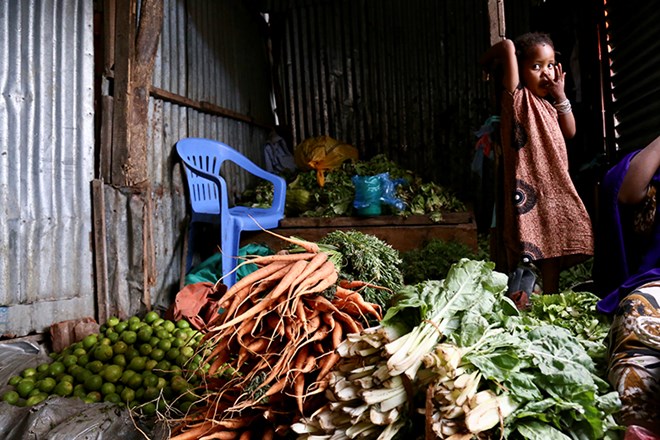
Photo: Supplied/ World Bank © Hassan Hirsi
Three next steps in Somalia
Going forward, we must ensure that preventing conflict does not become a new ‘project’ but a shift in our entire approach
to fragile situations. An approach that is inclusive, sustained and
focused on the potential of states and societies to develop their own
pathways to peace.
Second, we need to address women and youth like we address other issues that are key to peace: with consistent and dedicated attention and resources.
One important implication is the need to invest in the capacity of
government actors charged with leading and co-ordinating relevant
activities, such as my own Ministry. As highlighted in a recent OECD study on donor support to gender equality, this is an important gap across fragile and conflict-affected countries.
Finally, this important report and discussions in Washington D.C. must
lead to discussion and real action in our countries. We know what to do. Now let’s do it.
In Somalia there are key windows of opportunity to translate the
prevention agenda into action. In particular, the preparations for our
elections in 2020-21 and the on-going constitutional review provide
unique openings to ensure an inclusive society for generations to come.
My Ministry aims to help seize these, including by enabling diverse
groups of women to develop joint demands and strategies to make their
voices heard.
We also have significant opportunities to strengthen co-ordination
between all national and international actors: Working groups
established for each pillar of the National Development Plan, including
Pillar 9 on Human Rights and Gender Equality, provide a forum where
government, civil society and the international community can coordinate
their work, develop joint strategies and serve as champions for more
coherent, transformative and far-sighted support.
It is important that we act now to seize these opportunities.
My Ministry looks forward to working together to make the important
principles set out in the World Bank/UN study a reality.
Hon. Deqa Yasin Hagi Yusuf serves as the Minister of Women and Human Rights Development of the Federal Government of Somalia. She previously held the position of Deputy Chair of the Federal Indirect Election Implementation Team (FIEIT), where she played a central role in increasing female representation in both houses of parliament in Somalia. Prior to joining the government, Yasin worked as Operations Manager with IIDA Women’s Development Organization, a civil society organisation advancing peacebuilding, women’s empowerment and human rights in Somalia since 1991.