The Stranger
Wednesday June 6, 2018
by Kelly Kenoyer
American Islamophobia reveals our nation’s long history of prejudice. 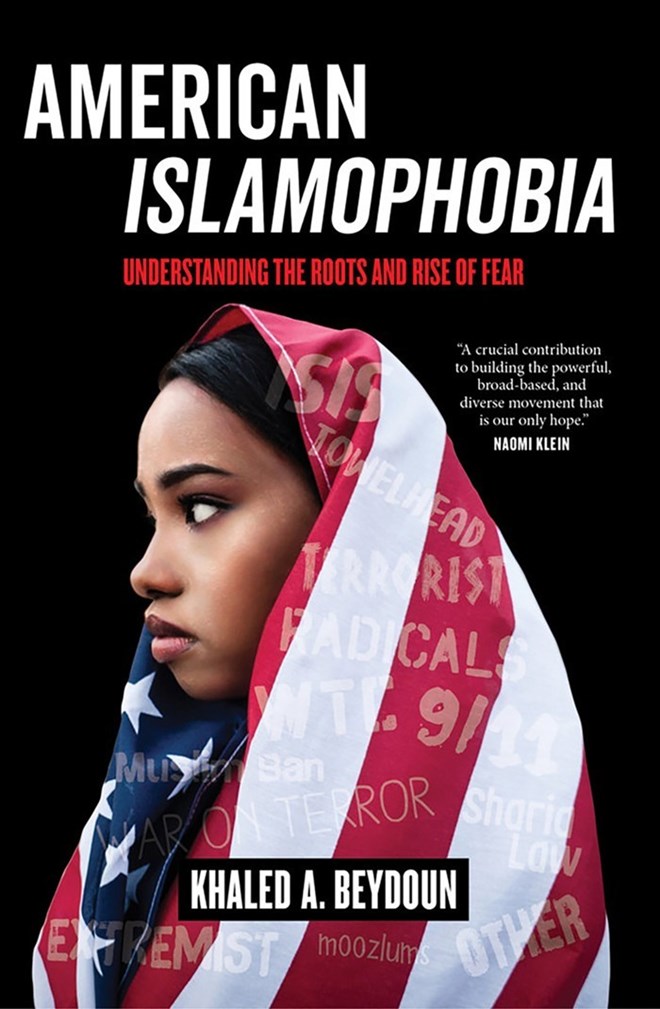
American Islamophobia opens with its author, Khaled A. Beydoun, coming to a tragic realization: Converting to Islam is a dangerous proposition for anyone living in the United States.
While visiting Los Angeles, Beydoun learns that his Uber driver, an undocumented immigrant, is considering converting to Islam. He agonizes over what to say to the man, who admires his activism and work as an associate professor of law at the University of Detroit Mercy.
Beydoun eventually says, “I ask you to think about whether now is the right time to become a Muslim. Your status already puts you in a difficult position, and falling victim to Islamophobia would put you in a more dangerous place.” The driver—already vulnerable to the Trump administration’s anti-immigration policies—risks becoming doubly maligned if he dares express interest in Islam. So, despite Beydoun’s devotion to his religion, he turns the other man away.
Drawing clear lines through US history—from the Orientalism of the founding fathers to 1995 mainstream media assumptions that the Oklahoma City bomber was a “Middle Eastern terrorist”—Beydoun shows that discrimination against Muslims in the United States is as old as the nation itself.
Beydoun writes in a clean academic style, but American Islamophobia isn’t dry. There are personal moments, such as when he describes his youth as a poor kid being raised by a single mother on welfare. He brings sharp focus to the plight of poor Muslim communities ravaged by domestic spying and policing.
Those most harmed by these punitive programs are the poorest Muslim communities of color—like the large Somali enclave in Minneapolis where middle schoolers are asked to spy on their classmates, interrupting learning in what should be a safe space.
American Islamophobia is a well-crafted history
of this country’s relationship with Islam and the institutional and
cultural discrimination that defines that relationship. Beydoun’s book
should be read by anyone curious about common Islamophobic
misinformation who wants to become an ally to those facing a unique form
of American discrimination. 