Sunday December 7, 2025
By Abdifatah Sayid Ahmed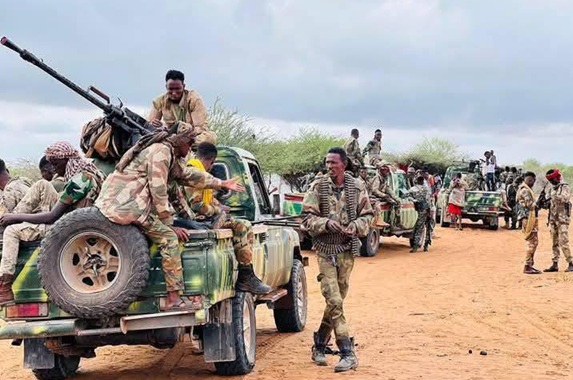
This piece serves as a critique and response to the article written by Matt Bryden for the Africa Center for Strategic Studies. It challenges the inaccuracies and unsupported claims presented in his analysis, and to contrast them with verified facts on the ground. The assessment provides a structured, evidence-based evaluation of Bryden’s arguments, highlights where his narrative diverges from reality, and presents a more accurate picture of Somalia’s security and counterterrorism landscape based on recent operational gains.
Matt`s article presents a distorted assessment of Somalia’s current political and security realities. It omits critical achievements made by Somali institutions in counterterrorism, governance, and state-building, while misinterpreting constitutional dynamics and exaggerating extremist threats. The analysis selectively amplifies Al-Shabaab propaganda, relies on unverified assumptions, and adopts hypothetical collapse scenarios that are not supported by ground realities and institutional trajectories.
I won`t address every point of misrepresentation in Matt’s article. Rather, I will focus on presenting verified facts on the ground and key figures that accurately reflect the current security landscape. The aim is to provide a clear, evidence based perspective rooted in available data and current progress. My arguments are guided by documented developments, not by subjective interpretation, and seek to contribute to an objective and constructive understanding of the situation.
1. Misrepresenting Al-Shabaab’s Reach and Territorial Threat
The article claims that Al-Shabaab has surrounded Mogadishu and established effective checkpoints within 50km. This assertion is not supported by facts on the ground. Al-shabaab has not encircled Mogadishu at any point since 2011. While the group has conducted sporadic asymmetric hit-and-run attacks in areas surrounding Mogadishu, these do not constitute a sustained siege or encirclement of the capital. The nearest militant-held areas are approx. 150 kilometres away, with no continuous presence, encirclement, or sustained checkpoints. While the group has conducted irregular hit-and-run attacks and improvised explosive ambushes on transit routes, these do not constitute territorial control.
Contrary to the article’s depiction, Mogadishu currently enjoys its highest level of security since long, an 84% decrease in terrorist related incident in and around Mogadishu compared to December 2021. The Somali government exercises full control over nearly all strategic bridges and the capital’s extended corridors. These infrastructure routes, once vulnerable, have been secured and reopened for civilian mobility, trade, and military logistics through the currently ongoing silent storm and eagle eye operations.
In his he piece suggests that Al-Shabaab’s halted advance toward Mogadishu in 2025 was “inexplicable.” In reality, this must be attributed to Somalia security forces, whose determined and coordinated operations successfully disrupted the group’s momentum. The suggestion that the group simply paused for unclear reasons overlooks the role played by the Somali National Army and security agencies.
On the issue of foreign embassies’ withdrawal of “nonessential staff” is also misleading. The presence or withdrawal of foreign embassy personnel is not an accurate indicator of a country’s security situation. Strategic decisions regarding a state’s security are determined primarily by the resolve, capacity, and leadership of its national security institutions, not by embassy travel advisories or partial evacuations. In other conflict-affected states such as Sudan, Libya, Iraq, and Afghanistan, diplomatic missions have remained operational despite severe insecurity. Furthermore, some of the globally referenced travel advisories have historically been influenced by political or economic tensions, such as the US advisory on Turkey in 2019 during the S-400 missile dispute, the UK advisory on Kenya during the 2013 election amid increasing Chinese investments, and US advisories on Mexico during NAFTA renegotiations in 2017.
2. Undermining Military Gains and State-Coordinated Counterterrorism Efforts
Matt`s piece overlooks significant territorial gains achieved since 2022 in Lower Shabelle, Middle Shabelle, Hiraan, Galgaduud, and Mudug. Over 1.3 million citizens have been liberated from Al-Shabaab-imposed extortions, forced recruitment, and fear. Strategic towns including Xarardheere and Ceeldheer have returned to state control. Government forces have restored local administrations, reopened schools and health facilities, and re-established judicial and policing functions in many of these areas. The author’s implication that these gains are short-lived is inaccurate. While Al-Shabaab attempted a limited advance in mid-March 2025, this was swiftly halted by the bravery and courage of the Somalia security forces. Instead of acknowledging this resilience, the author frames temporary engagements as evidence of systemic fragility. This interpretation ignores the coordinated role of the Somali National Army, community defence forces, intelligence services, and local administrations in stabilizing recovered territories.
Additionally, the article incorrectly suggests that operations were “driven largely by external actors.” In reality, the 2022–2023 offensive was Somali-led. International partners provided air support and logistical facilitation, but not ground intervention or strategic leadership. ATMIS involvement was limited to medevac, casevac, reflecting Somalia’s increasing operational autonomy and combat capabilities.
Again, the piece suggested that Puntland independently received direct international support during the Al-Miskad operations, without federal involvement. This is factually incorrect. Both AFRICOM and other international partners operate strictly under the Federal Government’s authorization, via the Ministry of Defense and ONS. International security cooperation in Somalia follows agreed protocols ensuring sovereignty, coordination, and compliance with constitutional mandates.
3. False Casualty Figures and Misleading Use of Sources
The claim that 10,000 to 15,000 Somali soldiers have been killed since 2022 is unsubstantiated. The number reportedly cited by the CDF was intended to illustrate pension planning and disability conditions within the army. No official source has reported casualty figures of this scale. Presenting hypothetical numbers as factual and misquoting public officials tells only about the credibility of the author.
4. Misinterpreting Somalia’s State-Building and Federal System
The article depicts Somalia as an “undeveloped, centralized system” where federalism has not taken root. This ignores the progress made since the establishment of Federal Member States. Somalia now operates under a decentralized governance model with shared responsibilities in security, judiciary, education, immigration and revenue allocation. Federal and state cooperation has improved through joint frameworks such as the National Security Architecture of 2023, which clearly manifested the path to federalisation of the security structure. The author’s position that Somalia has remained centralized since 1991 is not only historically inaccurate but also analytically weak, given existing administrative and fiscal decentralization mechanisms.
The constitutional amendment process in Somalia, that the author refereed to, is clearly outlined in the Provisional Constitution. Somalia has always intended to transition from a provisional constitution to a finalized one through formal parliamentary processes and public consultation. This period is not an abnormal moment for amendment, but rather part of Somalia’s state-building roadmap.
5. Incorrect Religious Framing and Generalized Extremism Claims
The article risks conflating Somali Islam with radicalization, suggesting that religious currents inherently feed extremism. Somalia is a 100 percent Muslim society that broadly embraces peaceful Islamic values. The existence of Islam as the state religion, declared in both the 1960 Constitution and the 2012 Provisional Constitution, does not imply a predisposition to violent extremism. Many Muslim-majority countries in the world are stable and enjoy peaceful governance models that reflect their societal values. Associating Islamic identity with extremism reflects a biased narrative and echoes arguments often used by far-right groups in Western contexts.
This argument is both sociologically inaccurate and potentially stigmatizing. As a society, Somalis have historically and constitutionally endorsed Islamic values without adopting religious extremism. Peaceful traditions and religious scholars have consistently rejected Al-Shabaab’s violent ideology. Associating Somalia’s social-religious identity with radicalism disregards the government’s collaboration with religious leaders in countering extremist narratives through PCVE and strategic communications frameworks.
The claim that Somalia has been led by ideologically Islamist movements for over a decade is unfoudned. In a 2015 interview, President Hassan Sheikh Mohamud explicitly denied belonging to Damul Jadid or any other religious movement. Therefore, portraying Somalia’s leadership through a narrow ideological lens is totally misleading.
6. The Somaliland Argument: Selective and Speculative Use of Political Scenarios
The arguments presented on Somaliland’s sovereign claim are speculative and not grounded in legal or political basis. The article suggests that international recognition of Somaliland could accelerate if Somalia becomes unstable, which is neither supported by current diplomacy nor ongoing dialogue efforts. This analysis fails to consider existing dialogue channels, including the FGS-Somaliland talks, and the current dynamics of the Sool-Sanaag regions.
7. The Recycled Narrative of the Collapse Scenario
The portrayal of Somalia on the brink of collapse and Al-Shabaab capturing Mogadishu reflects outdated narratives from the 2011 era rather than current realities. While challenges exist, the government's ability to operate, legislate, negotiate, and coordinate with international partners demonstrates resilience, not fragility. Somalia’s bid for stabilization, security sector reform, and UN Security Council membership reflects institutional consolidation rather than deterioration.
In conclusion,
I would agree with Matt`s description how Al-Shabaab could be defeated. He correctly noted that defeating Al-Shabaab requires simultaneous military efforts on multiple fronts. This is precisely the approach currently being implemented through federal-state coordinated operations, with support from international partners. The acknowledgement that Al-Shabaab can be defeated affirms the validity of Somalia’s current strategy.
The political and security landscape in Somalia continues to evolve in a positive direction. The Federal Government is reshaping the security environment, with national forces restructured, gaining momentum, expanding capabilities, and consolidating territorial control. Electoral reforms are advancing toward universal suffrage, reflecting progress in Somalia’s state-building agenda.
In this context, the period of speculative unfounded analysis about Somalia should be considered over. “Somalia analysts” should ground their assessments in verified data and observable developments rather than outdated assumptions or inherited narratives. The era of “Cadaan Studies” in which commentary relied on narrow frameworks or generalized impressions has gone forever.
Author BIO
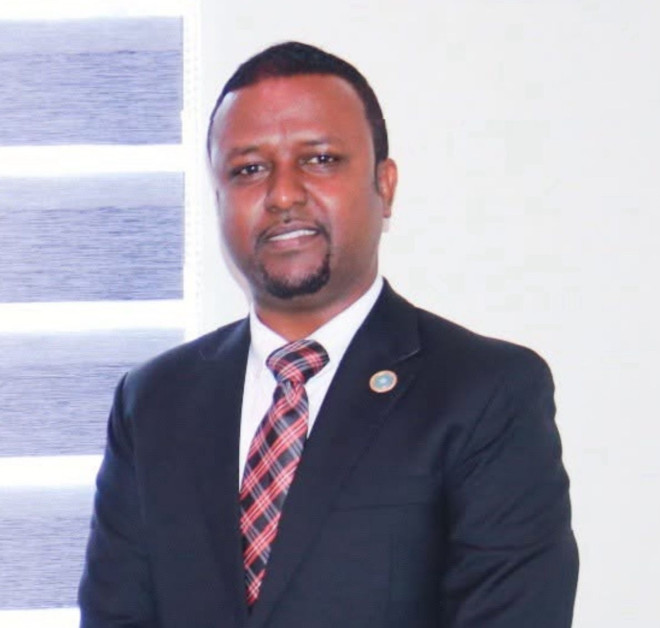
Abdifatah Sayid Ahmed is a Somali security and governance professional with over 15 years of experience in national security, intelligence, counterterrorism, and peacebuilding. His career spans senior leadership roles in the Ministry of Defense, The National Intelligence and Security Agency - NISA, and with international partners including AFRICOM and UN agencies. Abdifatah holds a Master’s degree in Security, Conflict, and International Development from Leicester University and a Post-Graduate Diploma in Peacebuilding and Conflict Transformation from Makerere University.