
Friday November 3, 2017
By Felix Horne
Dearth of credible reporting on government response obscures death toll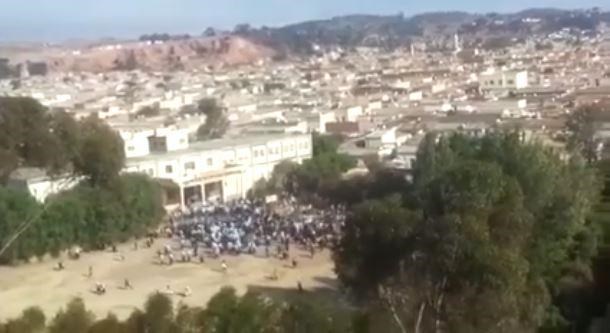
This week a very rare protest took place in Eritrea at the Al Diaa Islamic School in Asmara. Cellphone footage suggests government security forces used force to break it up – dozens of shots can be heard in the videos that have surfaced so far although there is no evidence there were any casualties. The protests were triggered by the arrest of octogenarian Hajji Musa Mohamed Nur, a member of the school’s board, after he made a passionate speech opposing the government’s increased interference in the affairs of the private school.
The exact chain of Tuesday’s events remains unclear. Eritrea has effectively eliminated independent criticism – it is one of the leading jailors of journalists in Africa and does not permit independent domestic media, non-governmental groups, or opposition political parties. It has never held elections, and the government tolerates no dissent of any type.
There is no clear evidence that anyone was killed at this protest based on the information that Human Rights Watch has; but since there are virtually no independent voices able to speak out in Asmara, the only source in Eritrea to push back against RSADO claims is the authoritarian government, which is also far from a credible source.
If Eritrea has nothing to hide, why doesn’t it allow independent investigators, media and organizations, domestic or international, to look into this incident? Eritrea has begun to open the doors to some international journalists over the last two years, but it has a long way to go on press freedom. If independent journalists had been able to report freely from the school protest, there could well be a very different international understanding of this protest. Eritreans need independent reporting so they can know the truth, rather than falling into ill-informed and polarized debate.