
Monday, March 26, 2007
 | ||
|

Urging the three countries to carefully monitor the situation, FAO said a second-generation locust infestation from a December outbreak in
"There have been several new developments in the past few days in three key areas," FAO said in an update on the crop-devouring insects issued on Friday. They were present in pearl millet crops in wadis and in natural vegetation on the coastal plains, the agency said.
Small bands were also present in the Silil area on the northwest coast of
The swarms may move in any direction - up the escarpment towards the Ethiopian border, northwest towards the Eritrean highlands, east along the coast, across the Gulf of Aden to southern Yemen - or simply stay on the coast and eventually breed once the long rains commence.
Operations to control the infestation were ongoing, FAO noted, adding that this week aerial spraying would start, to try to contain the scale of the expected migration.
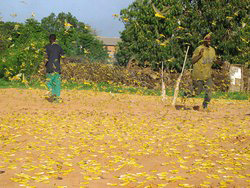
The locust is a species of short-horned grasshopper that can either form part of a swarm of adults or become a wingless nymph (hopper). The swarms - which travel up to 130km a day - can measure from one to several hundred kilometres in length, posing a serious threat to agriculture.
According to the FAO, locusts regularly cross the
eo/mw
Theme(s): (IRIN) Early Warning, (IRIN) Food Security
[ENDS]
Source: IRIN, Mar 26, 2007